
Brew-in-a-bag
Brew in a bag (BIAB) is an easy and economical way of brewing beer at home.You need a kettle with a brewing bag, equipment for fermenting your beer and ingredients.
You can find more starter kits and recipe kits here.



1. Calculate water volumes and heat the water
The first step is to figure out how much water you will need for the mash. We recommend using at least 5 liters of water per kg of malt:
Malt weight (in kg) x 5 = volume of mash water
Example: If you want to brew 10 liters of beer from 2.2 kg of malt, you will need at least 5 x 2.2 = 11 liters of water the mash. The malt also claims some space, so the total volume required is 13.5 liters. Since the malt soaks up 1 liter of water per kg of malt, you can add extra water to compensate for this. Just make sure that your mash vessel can hold the whole volume without spilling over.
Heat the mash water to a couple of degrees above your desired mash temperature, the temperature will drop a couple of degrees when malt is mixed with water.
2. Mashing
Place the mash bag in the brewing kettle, while ensuring that the edges of th mash bag reaches outside the rim of the brewing kettle. Add the crushed malt while stirring, until the malt is completely soaked and no lumps remain. Now you have performed the mash-in.
Check the temperature of the mash. If the temperature is too low, add some hot water. If the temperature is too high, continue stirring for a while or add some cold water. Put a lid on the kettle and cover with additional insulation to maintain a stable temperature during mashing. Let the mash go on for 60 - 90 minutes. You can stir the mash and check the temperature about halfway through the mashing.
At temperatures around 62 - 70 °C starches in the malt are converted into fermentable sugars by the enzyme amylase.
After mashing, the mashing bag is to be lifted out of the kettle. Without spilling malt into the wort, lift the mash bag out. The mash bag can then be placed on an oven rack on top of the kettle, for further draining into the kettle. It's good to have some assistance when performing this step, as it is a quite heavy lift.
3. Wort boil and hop additions
While wort is draining from the mash bag, the heating can be switched on to bring the wort to a boil. If you want to increase the wort volume, you can add some additional water at this point. Carefully pour some hot water (max. 78 °C) over the mash bag to extract some remaining sugars from the mash. This is called sparging.
Make sure the wort does not boil over. Avoid using a lid during the wort boil.
Depending on the recipe, hops are added at different times during the boil. When the first hops are added there may be some foaming, but it will soon settle. A wort boil usually lasts for 60 - 90 minutes.
4. Cooling
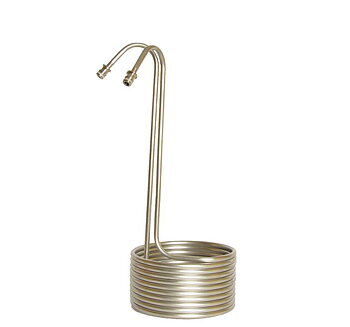
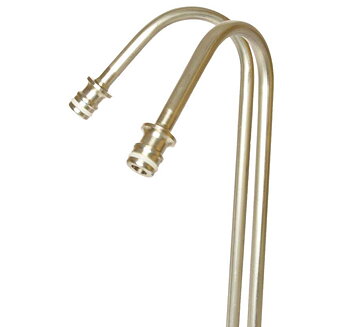
Cool the wort down to room temperature, ideally this should take no longer than 45 minutes. If you don’t own a dedicated wort chiller, you can use the kitchen sink or bath tub, as long as the kettle fits. Keep some movement in the cold water to increase the cooling effect.
5. Fermentation
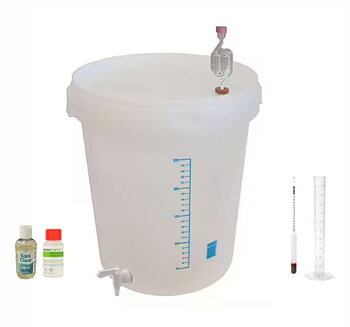
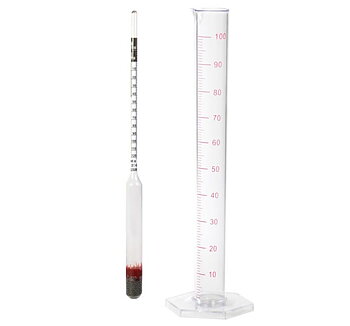
Pour the wort into a sanitized fermentation vessel. Save a small sample of wort to check the density (OG) using a hydrometer. Using this OG, the final alcohol content in the beer can be calculated, and the brewing efficiency can also be estimated.
Aerate the wort well by shaking the fermentation vessel with the lid on. Add the yeast, as instructed by the yeast manufacturer.
Put the fermentation vessel in a calm space with a correct temperature for the yeast strain. Wait until fermentation is complete before the beer is bottled or kegged.