
Fermentation and packaging
After you have mashed, boiled and cooled the wort, comes an absolutely essential step for the beer: fermentation.As the old saying goes "brewers make wort, yeast makes beer".
The best thing you as a brewer can do is to give the yeast the best conditions to ferment the wort.
To give the yeast the best conditions, you should:
- Keep equipment clean and disinfected
- Add enough healthy yeast
- Oxygenate the wort properly when the yeast is added
- Ferment at the correct temperature
- Protect the fermenting wort from oxygen in the air by choosing fermentation vessel and use caution when transfering

Fermentation instructions
Preferably choose a dark corner in a room with a suitable temperature for your fermentation. The temperature should be about 20 °C for ales and about 10 °C for lagers.If you make a yeast starter, place it in the room you are going to use the day before so that it gets used to the temperature.
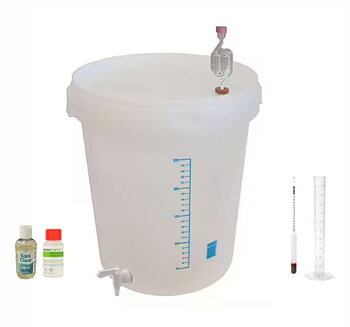
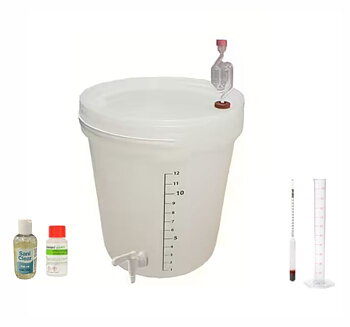
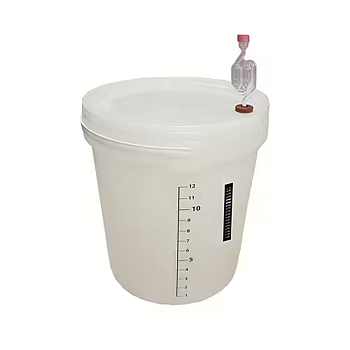
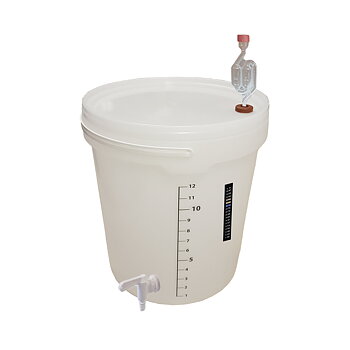
You should use a fermenter with that has a tight-fitting lid, but still allows the CO2 produced during fermentation to escape. Carefully clean the vessel and any equipment that comes in contact with the yeast/wort. We recommend the cleaning agent PBW, which is developed specifically for the brewing industry. When the equipment is clean, it must also be sanitized. We recommend Star San or Saniclean for this.
All equipment that comes into contact with the chilled wort must be disinfected.
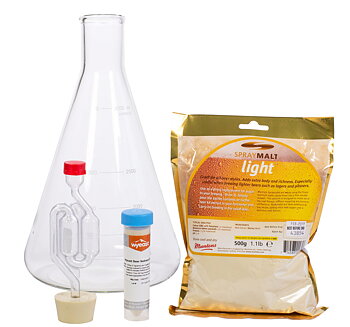
If you have made a yeast starter, it can be poured into the cleaned and disinfected fermenter.
Mix the cooled wort with the starter in the fermenter. Avoid excessive temperature differences between wort and starter, ideally the yeast and the chilled wort should have the same temperature.
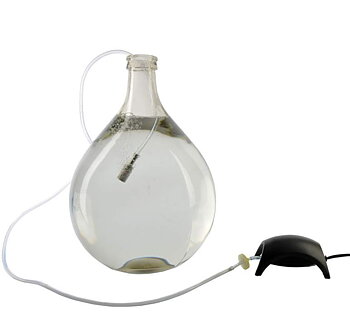
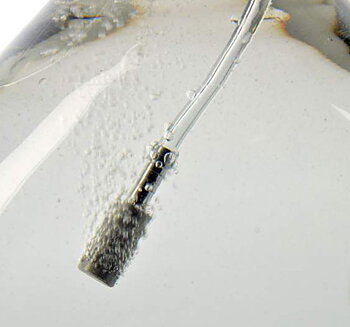
The wort should be well oxygenated before fermentation. You can whisk in air with a well-cleaned and sanitized ladle, or shake the fermenter for a few minutes. However, in order to get proper oxygen in the wort, special equipment is required.
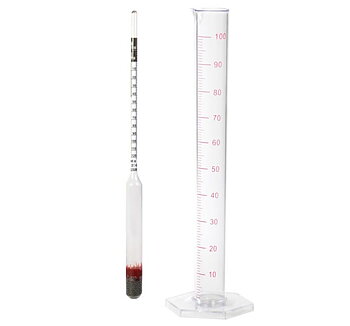
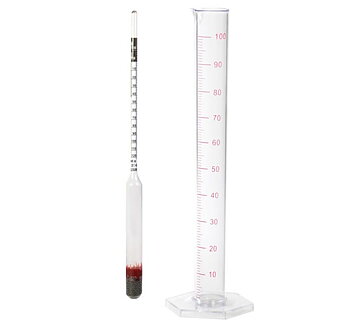
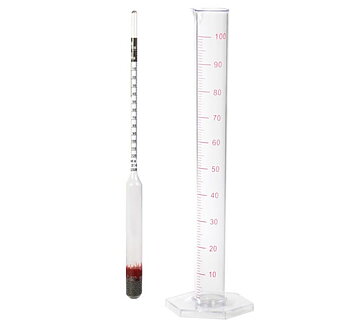
Take a wort sample in a measuring glass and measure this with a hydrometer before fermentation. The hydrometer gives a value of the gravity (sugar content) before fermentation and an indication of how strong the beer will become.
The wort is now left to ferment.
How long the fermentation takes depends on several factors, such as temperature, yeast strain, wort strength and oxygenation of the wort. Normally one week for ales and two to three weeks for lagers should be enough. But it does not hurt to leave the beer on the yeast and mature for a few extra weeks, however, avoid leaving the beer in a bucket fermenter for longer than a total of three to four weeks.
When the activity in the airlock has decreased (several minutes between the bubbles), it may be time to package the beer or move it to a secondary fermenter for further aging.
If you took a hydrometer measure before fermentation, you can take another measure after fermentation. When the fermentation is complete, the measured value has usually dropped to about a quarter. These two values can also be used to calculate the alcohol content.
To get a clearer beer, you can cool down the beer (0-3 °C) for 24-48 hours before packaging. This is called a "cold crash" and the cold temperature helps the yeast and proteins to settle on the bottom of the fermenter.
Aging
- Now the beer should be transfered into bottles or a keg. These must of course also be well cleaned and sanitized, as well as the equipment used. When bottling, it is very important that the beer is completely fermented. Taste: it should not taste sweet.
- Avoid aerating the beer when transfering.
- Carbonation takes place either from CO2 tank (kegging) or with a sugar addition (bottling). An adequate sugar content can be 6-7 grams of sugar per liter of beer. The exact amount depends on the CO2 content you want in the beer. It is also possible to use malt extract for this. Do not overdose on the amount of sugar when bottling, as this can result in "bottle fountains" when opened!